Vietnam and Australia: Measuring the success of the Comprehensive Strategic Partnership by what we build together
Vietnam’s General Secretary Tô Lâm's visit to Australia comes at a significant moment in the evolution of the Vietnam-Australia relationship.
Since the two countries elevated their ties to a Comprehensive Strategic Partnership in 2024, the challenge is no longer whether there is sufficient political goodwill or enough formal frameworks for cooperation. Those foundations are already in place.
The more important question is whether both countries can translate ambition into meaningful and lasting outcomes.
For more than three decades, bilateral cooperation has evolved alongside the changing priorities of each era. Agriculture and food security defined the early stages of the relationship. Energy, climate resilience and sustainable development followed. Healthcare rose to prominence during and after the COVID-19 pandemic. Today, science, technology, innovation, biotechnology and artificial intelligence are emerging as key pillars of future collaboration.
This shift reflects a broader reality. In the twenty-first century, prosperity and resilience increasingly depend not only on access to capital or natural resources, but on the ability to generate, apply and commercialise knowledge. The most successful partnerships will be those that help countries build capabilities rather than simply exchange resources.
Australia brings considerable strengths to this landscape. Its universities and research institutions rank among the world's best, while its innovation ecosystem has produced breakthroughs that have influenced everyday life around the globe. From high-speed Wi-Fi technologies, GoogleMap, and the flight data recorder to polymer banknotes, cochlear implants and advances in medical imaging, Australia has repeatedly demonstrated an ability to transform research excellence into practical social and economic benefits.
Yet Australia's challenge today is not simply producing knowledge. Like many advanced economies, it must find trusted partners with whom it can scale innovation, diversify research collaborations and strengthen resilience in an increasingly complex global environment. Engagement with Asia is no longer only an economic imperative. It is increasingly an innovation imperative.
Vietnam's growing importance must be understood in this context.
For many years, Vietnam was primarily viewed as an investment destination, a manufacturing hub or a development partner. While these remain important dimensions of the relationship, they no longer capture the full story. Vietnam is becoming an increasingly significant player in digital transformation, technology adoption and innovation. With one of the fastest-growing economies in the world, it offers a dynamic environment in which new ideas, technologies and business models can be tested, adapted and scaled.
At the same time, Vietnam continues to face important challenges in research capacity, commercialisation pathways, advanced workforce development and innovation governance. These challenges are not weaknesses to be overlooked. Rather, they are precisely why international collaboration matters. Partnerships are most valuable when they help address capability gaps while creating opportunities for mutual benefit.
This is where the Comprehensive Strategic Partnership has the potential to move beyond traditional models of cooperation. The relationship is no longer defined by one side providing expertise and the other receiving it. Increasingly, both countries have something the other needs.
Australia offers research excellence, world-class institutions and experience in translating discovery into impact. Vietnam offers scale, dynamism, growing technological capability and deep connections to some of the most important growth markets in the world. The opportunity lies not in exchanging these strengths, but in combining them.
However, successful collaboration does not occur automatically.
Scientific partnerships, technology transfer and innovation ecosystems are built over years, not months. They require trust, continuity and a deep understanding of institutional and cultural contexts. For Australian organisations seeking long-term engagement, this increasingly requires what might be called Vietnam literacy: an understanding of how Vietnamese institutions operate, how relationships are built, how decisions are made and how national priorities evolve over time. Equally, Vietnamese institutions benefit from a deeper understanding of Australia's research, regulatory and innovation systems.
Without such mutual understanding, even well-funded initiatives can struggle to achieve lasting impact.
One of the less discussed challenges facing the Comprehensive Strategic Partnership is that institutional familiarity has not always kept pace with political ambition. Building effective collaboration in research, technology and innovation requires more than diplomatic support. It requires people, institutions and networks that can bridge differences, build trust and sustain cooperation over the long term.
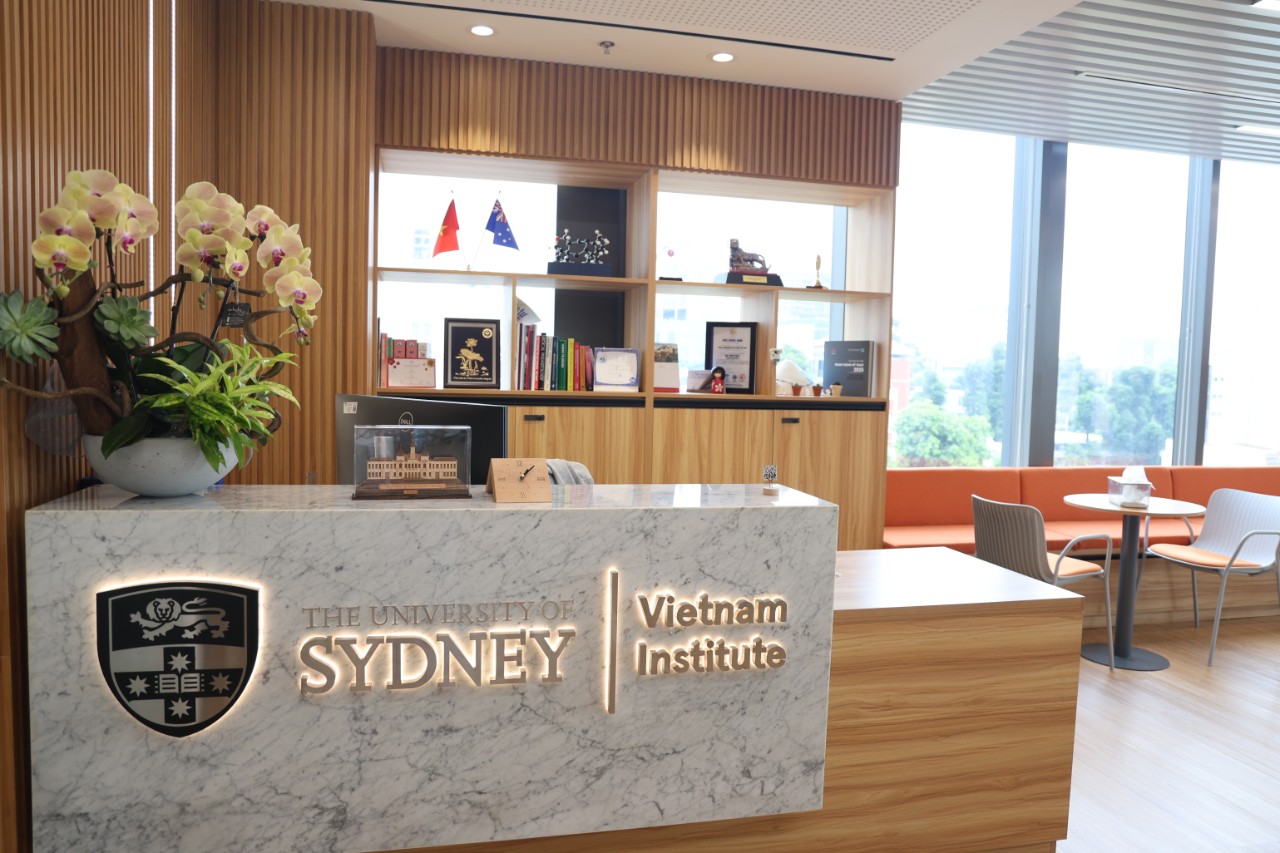
This is why universities, research institutes and knowledge networks are becoming increasingly important actors in international relations. In the lead-up to this visit, the Sydney Vietnam Institute has helped facilitate collaborations in areas such as mRNA technologies, artificial intelligence and interdisciplinary research. Significantly, this coincides with SVI's third anniversary, marking three years of work dedicated to strengthening knowledge partnerships between Vietnam and Australia and connecting researchers, institutions, industry and policymakers across both countries. These initiatives may not attract the same visibility as high-level diplomatic announcements, but they contribute to something equally important: the knowledge infrastructure that enables strategic partnerships to deliver tangible outcomes.
The true test of the Comprehensive Strategic Partnership will not be what is announced during a visit. It will come afterwards.
Success will depend on whether research partnerships endure beyond individual projects; whether scientific discoveries translate into practical solutions; whether businesses create new opportunities; and whether both countries develop the institutional capability needed to work together more effectively over time.
History rarely remembers relationships because of the number of agreements signed. What endures are the institutions that were strengthened, the technologies that were developed, the capabilities that were built and the opportunities that improved people's lives.
Seen through that lens, General Secretary Tô Lâm's visit is more than a diplomatic milestone. It is an opportunity to advance a more mature model of international cooperation: one that moves beyond signing agreements towards building capabilities, beyond dialogue towards co-creation, and beyond goodwill towards lasting impact.
Ultimately, the success of the Vietnam-Australia Comprehensive Strategic Partnership will not be measured by the documents signed during a few days of meetings. It will be measured by the trust, capabilities, technologies and shared value that both countries build together over the coming decades.
That is the true measure of a strategic partnership.
- Prof. Thu-Anh Nguyen -